Support


The crypto market is gradually emerging from the shadows and becoming part of the global financial system. Whereas tax authorities previously often lacked the tools to systematically track transactions involving digital assets, the rules of the game are now changing. New international reporting standards make transparency not just a trend, but a basic condition for exchanges, exchangers, and crypto services.
Recently, terms such as DAC8 and CARF have been popping up more and more in the news, but not everyone understands what they mean and how they apply to ordinary users, especially Ukrainians.
Let’s figure it out 👇
What are CARF and DAC8 and what is their role?
Previously, the crypto market operated separately: if you lived in Poland and used an exchange registered in Lithuania, the Polish tax authorities usually did not see your transactions — the data remained within Lithuania.
Now the logic is changing. Under the new rules, the exchange will submit a report to the tax authorities of its country, which may then forward the information to the tax authorities of your country of residence. As a result, data on transactions with crypto assets may appear in your country’s tax system.
This mechanism has been made possible by the introduction of two standards:
- CARF (Crypto-Asset Reporting Framework) is a single global “rulebook” developed by the OECD. It defines the list of data that crypto companies are required to collect about their customers.
- DAC8 is a special European Union directive that makes these recommendations mandatory law for all 27 EU countries.
Together, they create a system where tax authorities automatically receive information about the digital assets of their residents. This closes “gray areas” and makes the crypto market more transparent for the state, almost like regular banking transactions.
Who has to report to the state?
The new rules apply to almost all professional market participants – CASPs (Crypto-Asset Service Providers):
- Centralized exchanges and exchange services.
- NFT marketplaces (if digital assets are purchased on them as an investment or means of payment).
- Wallet providers and some DeFi platforms managed by a specific organization or company.
How will it work?
The system is based on an annual automatic exchange. This means that once a year, the exchange submits a report (set of data) to the tax service of its country, which in turn forwards it to the country of your tax residence.
What exactly will be included in the report:
- Type of transactions: exchange of crypto for regular money (fiat), exchange of one crypto for another, and purchases of goods or services through crypto services.
- Your data: full name, full residential address, date of birth, and your tax number.
- Finances: total proceeds from the sale of assets and the volume of transfers to external wallets, including non-custodial ones.
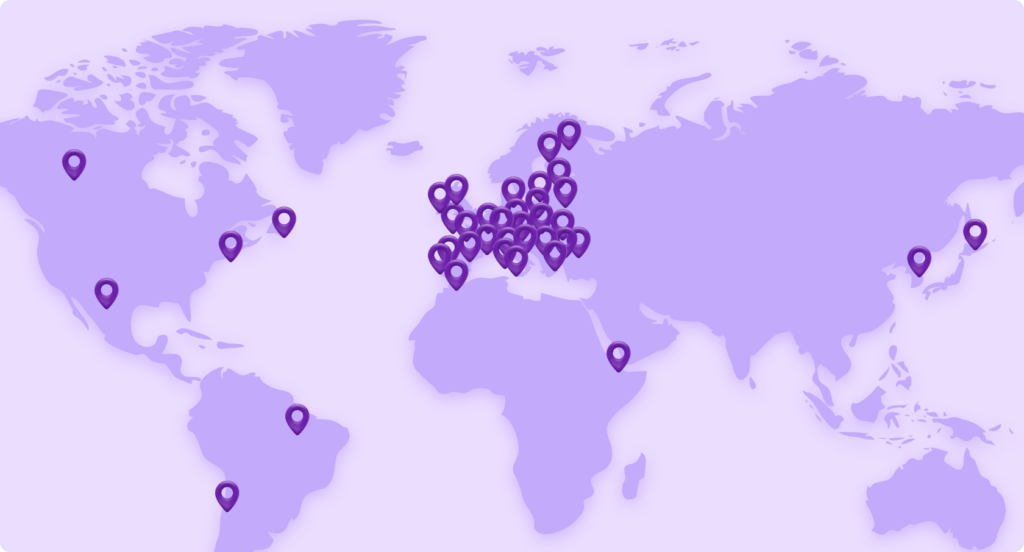
Geography and timing: who is already “in the game”?
More than 75 jurisdictions have already confirmed their readiness to exchange information about the crypto transactions of their residents. At the same time, the introduction of these rules is taking place in stages, so different countries are joining in waves.
- First wave (data collection from 2026, first exchange in 2027) — this group includes 52 jurisdictions that are the first to implement CARF and DAC8 standards. This means that from January 1, 2026, companies in these countries have already started recording data about your transactions in order to transfer them to the tax authorities in 2027.
- EU countries (27): Austria, Belgium, Bulgaria, Croatia, Cyprus, Czech Republic, Denmark, Estonia, Finland, France, Germany, Greece, Hungary, Ireland, Italy, Latvia, Lithuania, Luxembourg, Malta, Netherlands, Poland, Portugal, Romania, Slovakia, Slovenia, Spain, and Sweden.
- Other key countries: the United Kingdom, Canada, Japan, South Korea, Brazil, Mexico, Chile, as well as important financial hubs – Bermuda, the Cayman Islands, Gibraltar, Guernsey, the Isle of Man, and Jersey.
- Second wave (data collection from 2027, first exchange in 2028) – 15 more jurisdictions will join the system, including major crypto hubs. They will begin exchanging data a year later:
- UAE (Dubai), Singapore, Hong Kong, Turkey, the Bahamas, the Seychelles, Malaysia, and Thailand.
- Special status of the US – The United States plans to start full-fledged international information exchange under the CARF standard in 2029 (according to 2028 data). At the same time, internal reporting by US exchanges to the IRS is already being actively strengthened.
What is important for Ukrainians to know?
Although Ukraine has not yet officially implemented CARF, it is already part of global financial transparency – simply through other mechanisms.
- Current CRS exchange: Ukraine already automatically exchanges data on ordinary bank accounts with more than 120 countries.
- Tax residency: in the context of DAC8/CARF, the key thing is where you are a tax resident and what address you have confirmed (Proof of Address).
- If you are Ukrainian but live in the EU and provided a European address when registering on the exchange, your crypto transaction data may be reported to the tax authorities of that country under DAC8 rules.
- If you remain a tax resident of Ukraine and confirm your address with Ukrainian documents, crypto providers will not currently send data automatically to the Ukrainian tax authorities. This may change if Ukraine joins CARF.
- Some instruments may “surface” even without CARF: even without CARF, individual transactions with crypto instruments/derivatives may sometimes be reported through CRS, depending on the structure of the product and the provider.
The crypto market is maturing
The introduction of new standards is a sign that the crypto market is entering a more mature phase. Cryptocurrency is gradually becoming a more understandable financial instrument in international regulations, with clearer approaches to accounting, reporting, and auditing. In the long run, this could simplify many “everyday” financial issues, such as when you need to confirm the origin of funds for large purchases or financial procedures.
At Obmify, we recommend staying up to date with changes and using trusted services that operate transparently and according to the rules.
To learn more details or get personal advice on your case, go to our Premium Support.
This article was prepared in collaboration with Astrum.